This article is a CNCGLASS technical note on Cool Jade White, a 0.38 mm matte-embossed white EVA interlayer used to diffuse light in laminated glass rather than stay invisible. Quality-control figures are given for appearance, optical behaviour at one, two and three film layers, mechanical properties, adhesion, an 88.3% crosslink degree, and a two-step lamination cycle with a 120 °C hold for the test panels, which the note says is not a service-temperature rating of the finished laminate. The note states that the results describe the film and the laminates built for the programme, not a certified product, and that it is not a third-party test certificate or a certificate of conformity.
CNCGLASS-Ionic-Interlayer-Laminated-Glass-BS-6206-Class-A-Impact-Performance-Technical-Note
This article is a CNCGLASS technical note and performance summary on the soft-body impact performance of architectural laminated safety glass made with a 1.52 mm CNCGLASS ionoplast interlayer between two 8 mm annealed glass plies. Four 865 mm × 1930 mm panels were tested to BS 6206:1981, and the construction reached Class A at the 1,219 mm drop height: one panel did not break, and the other three broke safely, with the ionoplast interlayer holding the glass fragments and preventing a through-opening. The note states that it is not a third-party test certificate or a certificate of conformity.
CNCGLASS-SGP-as-High-Performance-Protective-Layer
This article explains SGP interlayers as a high-performance protective layer that is laminated between glass plies, not stuck on as a surface film. The protection is structural: stiffness, fragment retention, and residual load capacity in façades, railings, overhead glass, floors, and some transport or security laminates.
CNCGLASS-Regular-Fogging-Defects-in-SGP-Glass
This article looks at regular fogging defects in SGP laminated glass, where every lite showed an internal veil in the same position and outline. The piece treats that repeating shape as an autoclave process signature and advises opening the load, correcting the hold, and cooling at no less than 3.3 degrees Celsius per minute before reworking the plates.
CNCGLASS-Silicone-Membrane-for-Safety-Glazing-Vacuuming
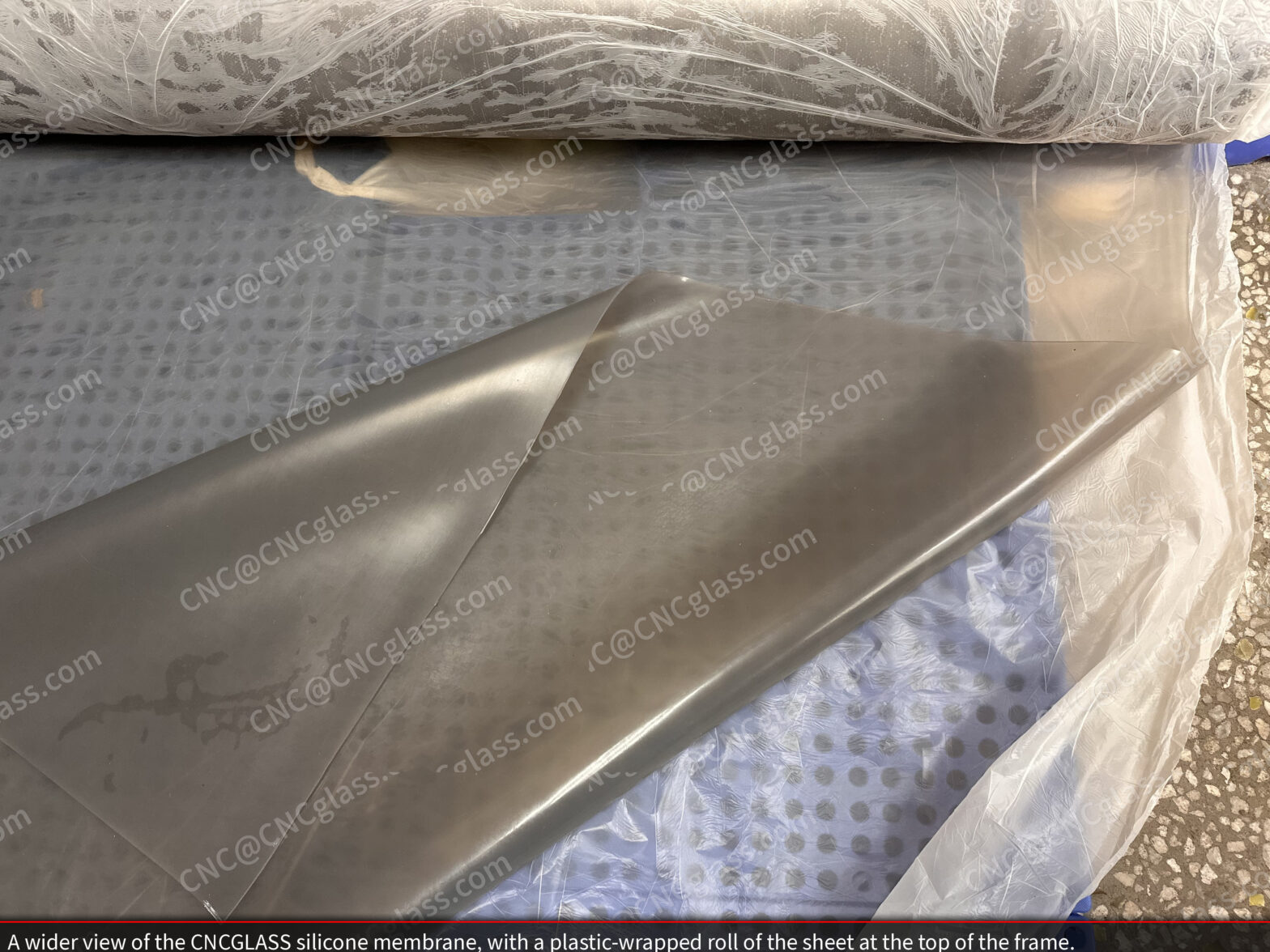
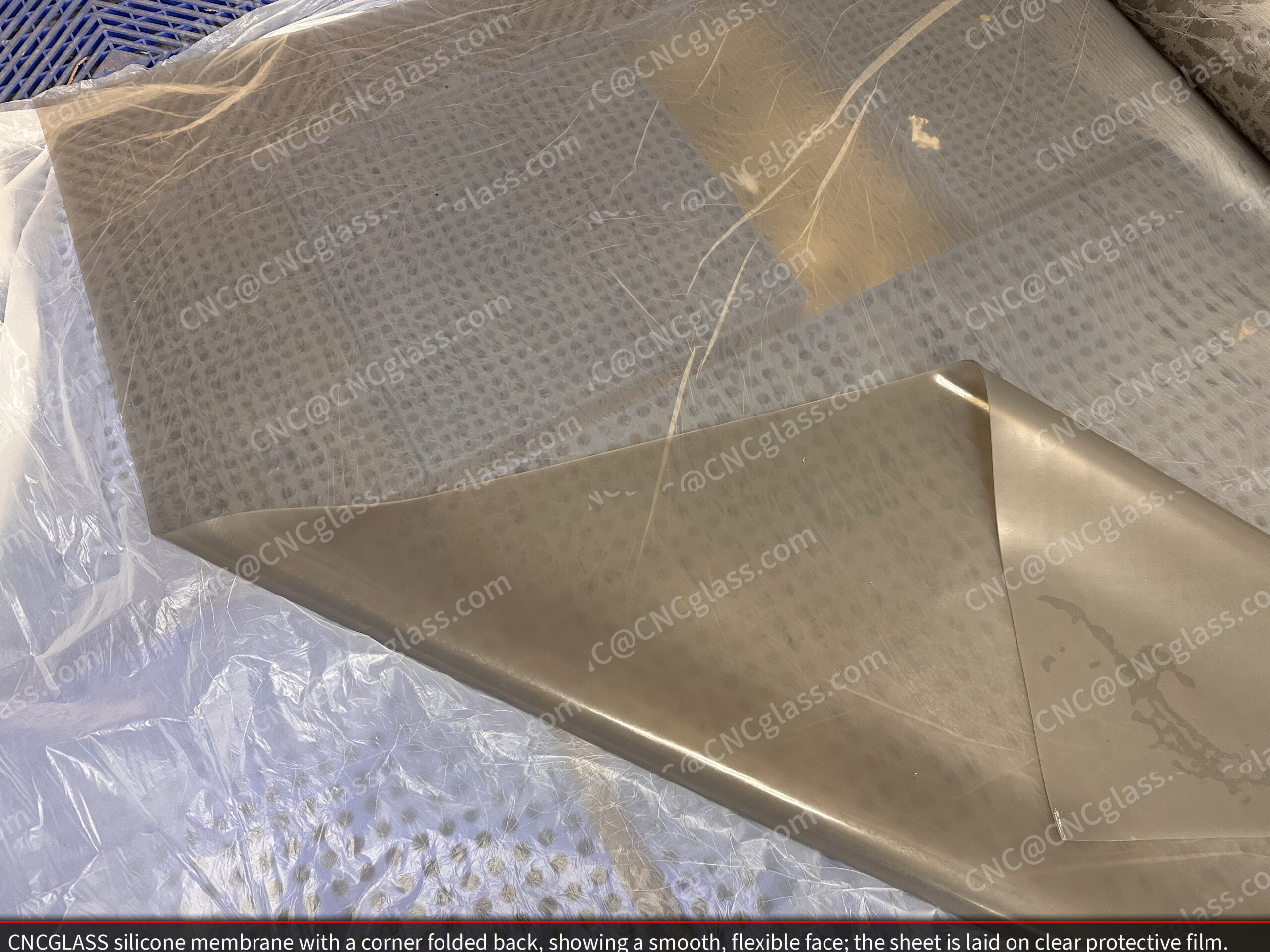
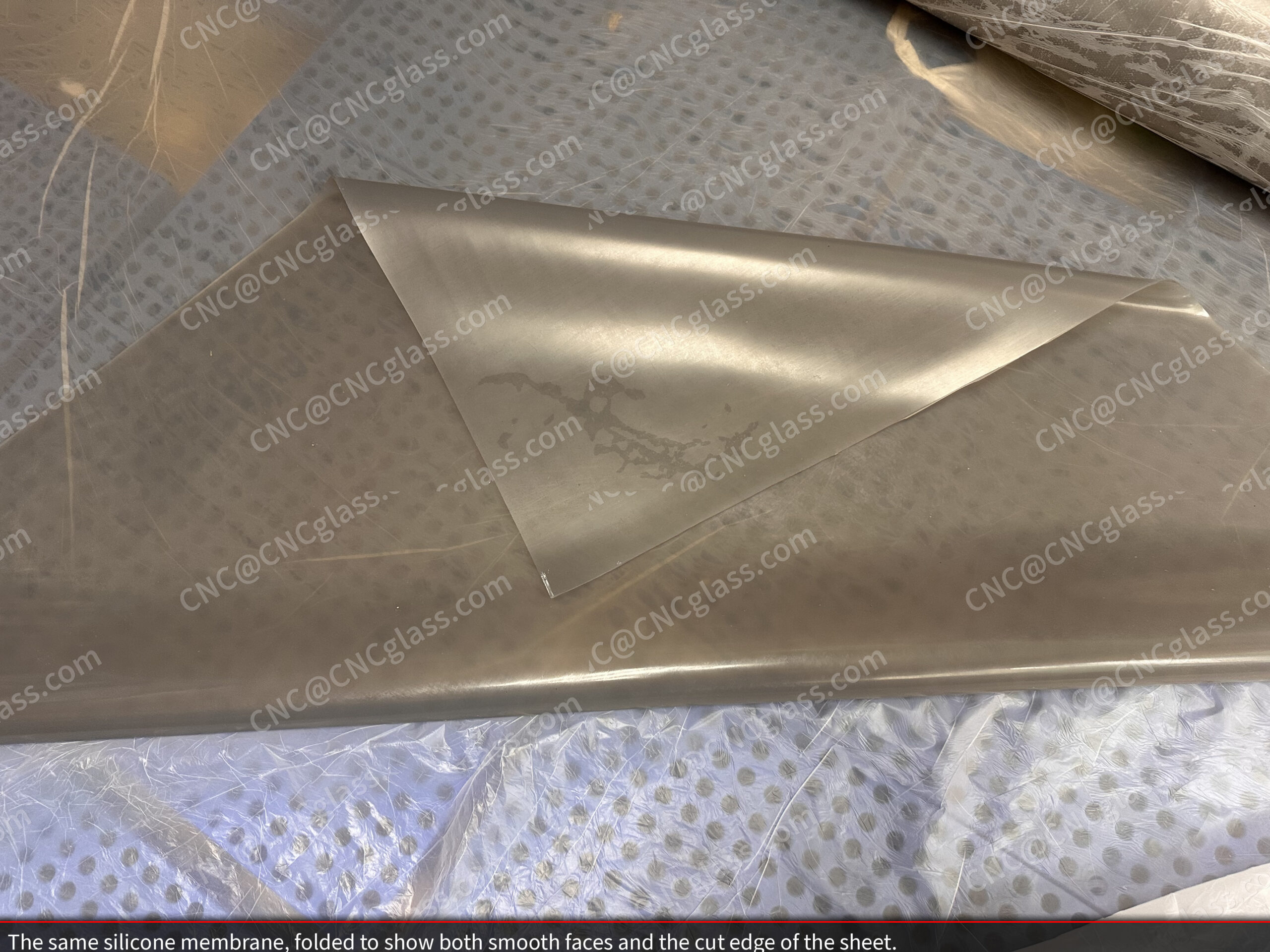
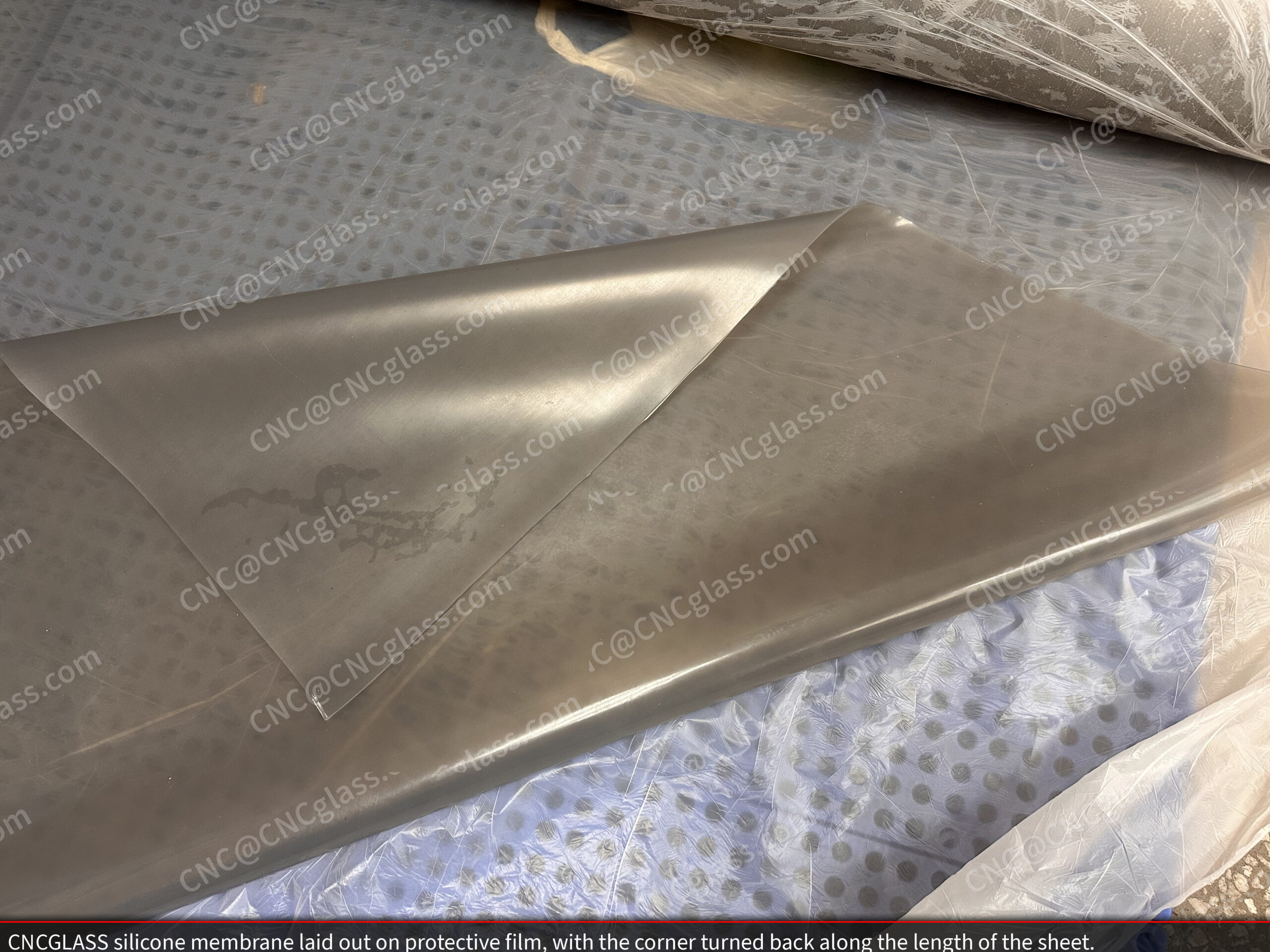
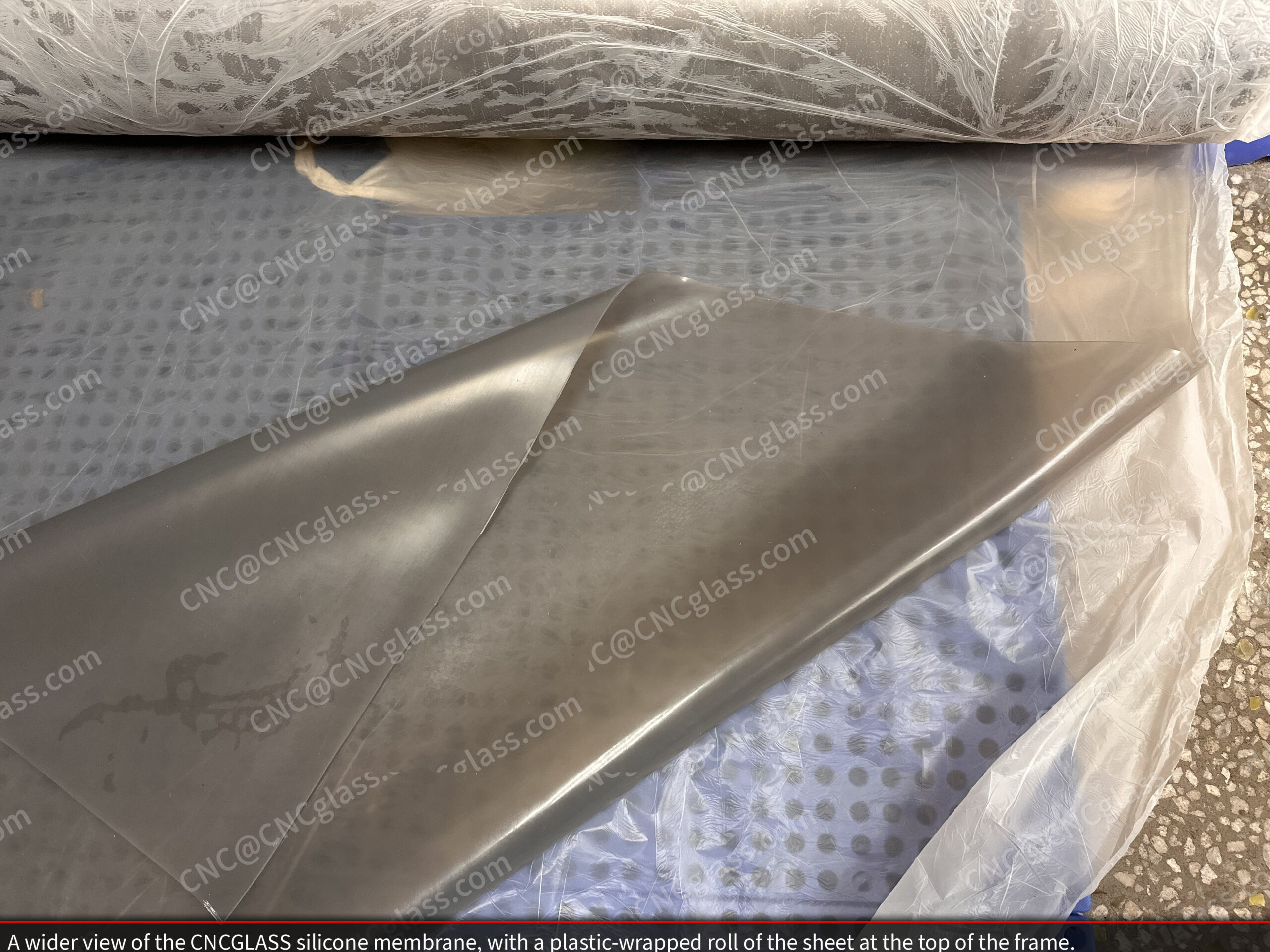
These photographs show a CNCGLASS silicone membrane used for safety-glazing vacuuming. A corner of the sheet is folded back so the smooth, flexible face is easy to see. The membrane is laid on clear protective film.
Existing CNCGLASS product pages describe these silicone membranes as used for glass-lamination vacuuming with EVA, PVB, SGP, or TPU. The product catalog lists the thin silicone membrane grade as both sides smooth, with size options of 1 mm or 2 mm thickness, 2.95 m width, and length to order; hardness 40±5 Shore A; tensile strength ≥9.5 MPa; tear strength ≥37 N/mm; elongation 750%; long-run temperature 220°C; strong EVA resistance; and a service life of more than 3,000 cycles. Those catalog figures are for that published grade and are not measurements of the sheet in these photographs. Enquiries can be sent to cnc@cncglass.com.
The last photograph is a wider view, with a plastic-wrapped roll of the sheet at the top of the frame.
CNCGLASS-Encyclopedia-Look-at-SGP-Interlayers
This article gives an encyclopedia-style definition of SGP interlayers. In architectural glass, SGP is an ionoplast sheet laminated between glass plies, used where residual stiffness and fragment retention matter, such as façades, railings, floors, and canopies. After a correct high-temperature, high-pressure autoclave cycle, the bonded plate is clearer and stiffer than a comparable PVB laminate, but the film is hygroscopic before lamination, does not flow like a low-viscosity EVA, and is not a drop-in replacement for every opening.
CNCGLASS-Bubbles-After-Vacuum-Bagging-SGP-Glass
This article is a process case on why bubbles can remain in SGP laminated glass after vacuum bagging. The example is a large dual-ply ionoplast plate, about 9.5 square meters, that still showed a wide field of bubbles and haze after the autoclave. The shop found that the autoclave vacuum circuit had lost power, and that the second-stage hold at 125 degrees Celsius was too cool for ionoplast flow. After the hardware was repaired and the second hold was raised to 135 degrees Celsius, a controlled rework cleared the bubbles.
CNCGLASS-Laminated-Film-for-Smart-Glass-Construction
This article explains how laminated interlayer film lets construction glass do more than keep weather out. EVA bonds the plies, retains fragments if a pane breaks, and can encapsulate a PDLC layer for switchable privacy. Safety, edge detailing, and a complete lamination cycle come first; switchable or decorative effects are added only when the brief truly needs them.
CNCGLASS-PDLC-Smart-Film-Applications-in-Architecture
This article looks at where PDLC switchable laminated glass earns its place in modern buildings. Laminated with EVA as safety glass, the pane can stay clear for daylight or frost on demand for privacy in offices, homes, hotels, healthcare rooms, and retail, without blinds or curtains, as long as the brief is specific and the electrical connection remains serviceable.
CNCGLASS-Laminated-Glass-Film-versus-Traditional-Glass
This article compares laminated glass made with an interlayer film to traditional monolithic, tempered, or insulated glass. It explains that a properly bonded EVA interlayer holds fragments after breakage, can block a large share of ultraviolet light, and allows clear, colored, or insert laminates—provided the film is fully cured and the opening is judged as a finished unit, not as a slogan.